GAME DESIGNER / SYSTEMS · QUESTS · PROGRESSION · TECHNICAL
MARIO
MERGOLA
I design and build open-world, RPG, MMORPG, and strategy games: I write the spec and implement it in-engine.

I am a game designer with an engineering degree. I take unformed ideas and unfinished parts of a game and make them work together: quest states, mission logic, progression rules, branching outcomes, design documentation, and the databases used by multiple departments.I write the specs and then implement them. On the open-world MMORPG, Scars of Honor, I organized player verbs into 12 quest archetypes to protect against repetitive content, and rebuilt the design-facing quest database so Design and Engineering worked from one source of truth. On Ascend, I built the climb around the five stages of grief, with zodiac puzzles gating the player's ascent past the people trapped there before them.I came to games from technical design, where I delivered projects north of $50M. That is where I learned that constraints are the design, not an obstacle to it.What follows is not a highlight reel of finished screens. Each piece shows how I think about gameplay as a system: player actions, state changes, conditions to check, the failure modes, and how a team implements it without guessing.
Each piece opens into a breakdown of the logic underneath: what the player does, what the system checks, and what engineering receives.

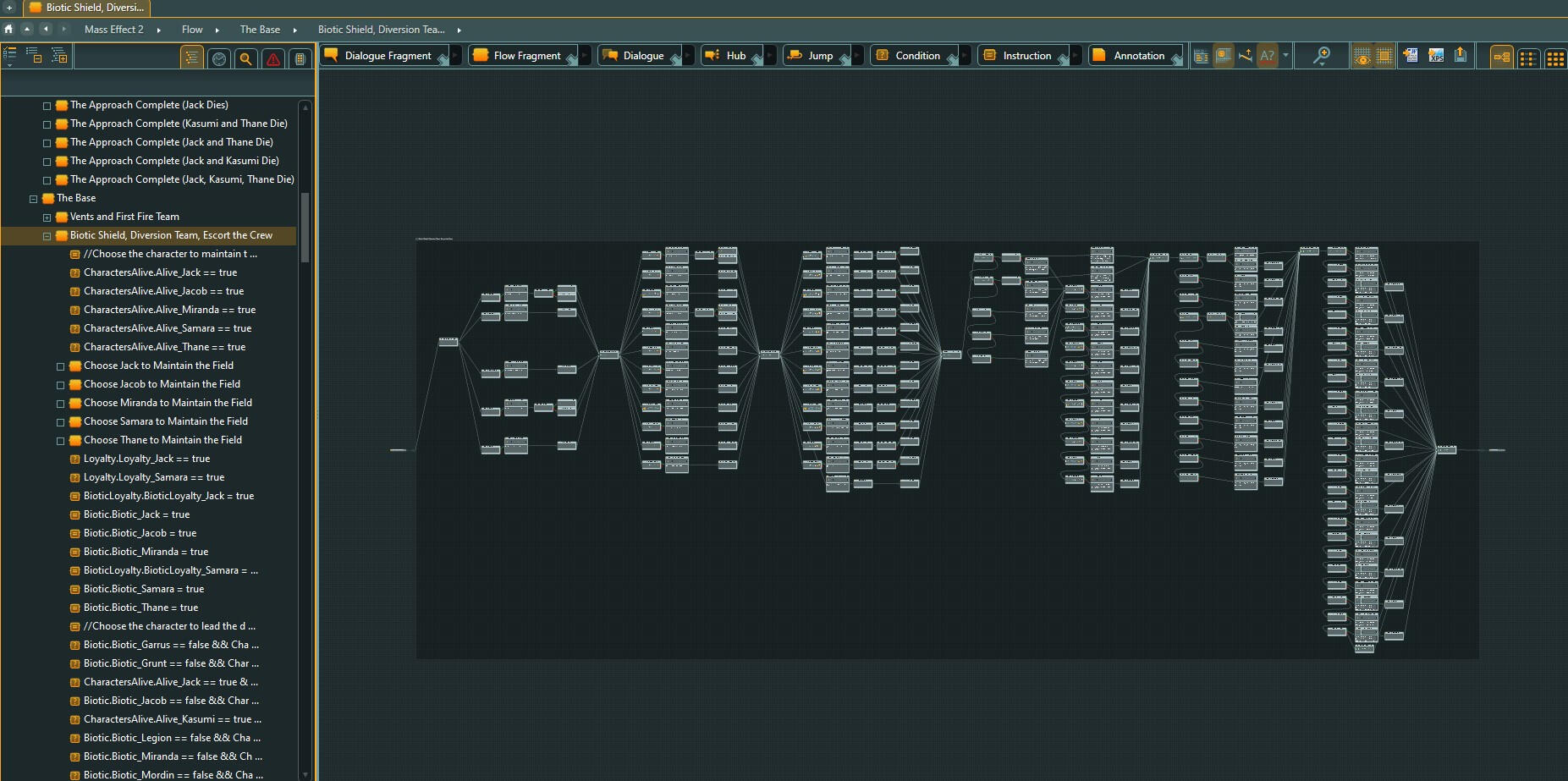
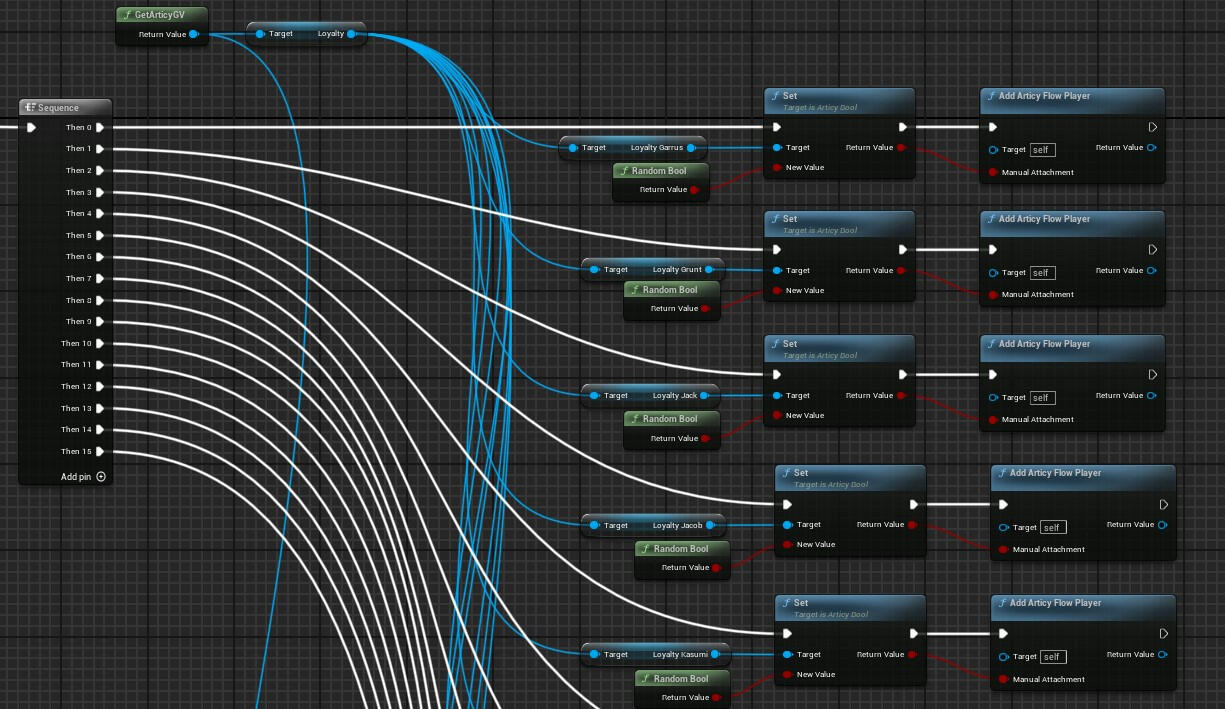
The mission everyone remembers, rebuilt as the logic underneath it. I mapped ten decision variables and six squad assignment checks in Articy Draft 3, then moved into Unreal Engine 5 when Articy could not hold the resolution, scripting the conditions, randomization, and survival outcomes myself so anyone could pick it up and follow it.

Twelve quest archetypes built from player verbs, so a large-scale MMORPG had structural protection against repetitive content, and one quest database Design and Engineering both built from. I also worked with level design and environment art to turn a wasteland into an underground volcanic settlement shaped by the faction's culture, power, and politics.

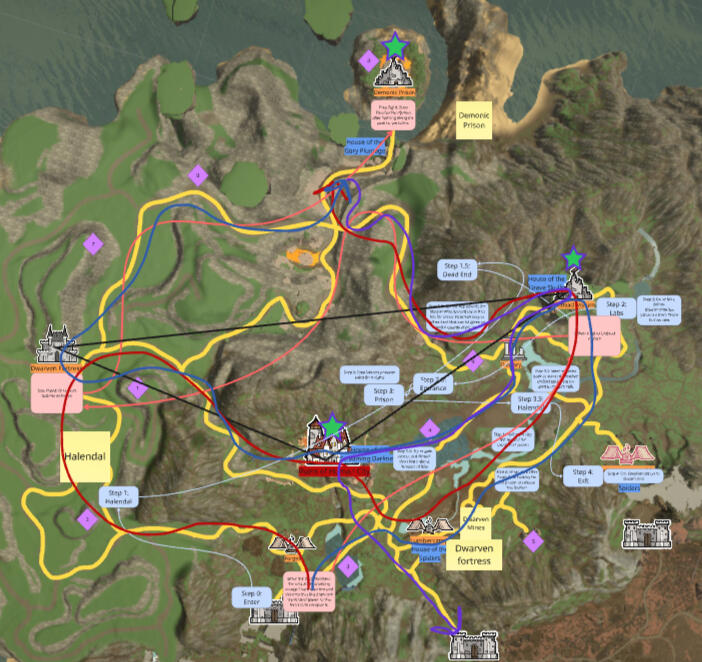
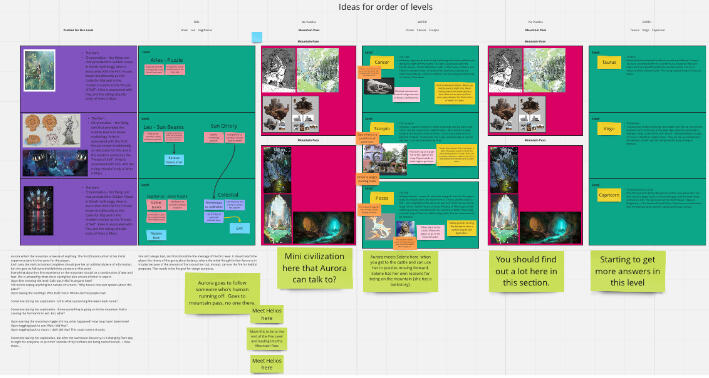
A magical mountain climb built around the five stages of grief, with zodiac puzzles gating the player's ascent past the people trapped there before them. Cut from a planned five-level arc to two without weakening the experience.

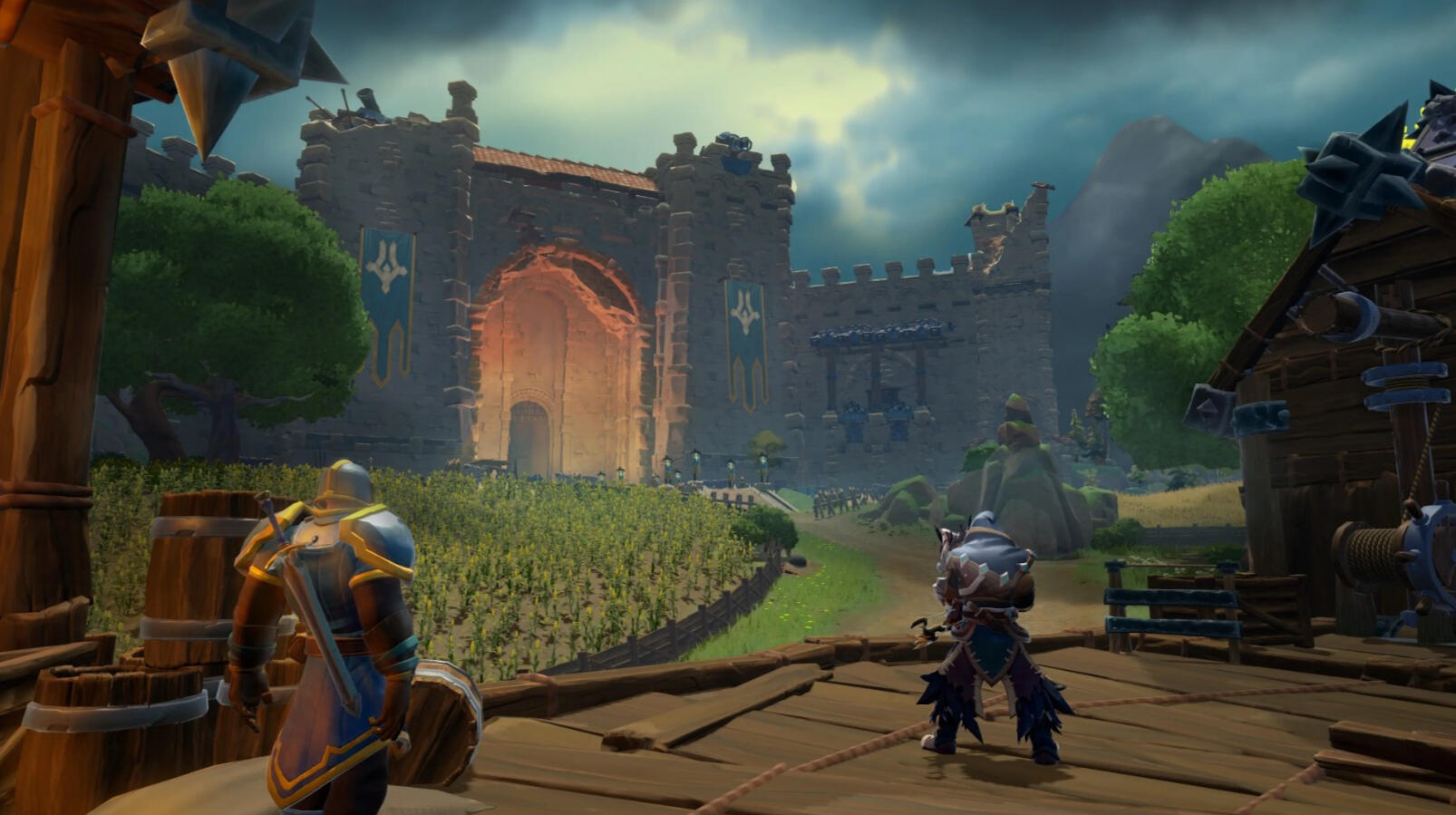
Quests designed around a magic umbrella that turned traversal into problem-solving and opened up the vertical expanse of the world, with mission structure and narrative triggers tuned so story beats fired reliably wherever the player wandered.

Led eleven designers by building the scaffolding first: reusable level structures, object placement examples, and in-engine templates the team could design inside without waiting on review.
HIRING FOR GAME DESIGN?
Open to design roles and contract work: quests, systems, narrative, technical.
Send me the problem you are trying to solve and I will tell you how I would structure it.
Game Design Portfolio
THIS PAGE HAS MOVEDEverything now exists on the home page in the Selected Work section.You can also use the links below to navigate:
MASS EFFECT 2: MISSION LOGIC RECREATION
Recreated a AAA-style branching final mission with 10+ tracked decision variables, 6+ squad and character assignment checks, randomized outcomes, survival and failure states, and a playable resolution flow across Articy Draft 3 and Unreal Engine 5.
The player arrives at the final mission carrying every choice they made across the game. They assign squad members to specialist roles, commit to a route, and then watch those decisions resolve into who survives and who does not. Nothing is announced as a checkpoint; the consequences simply arrive.
Ten-plus decision variables held in state across a long arc, six-plus squad and character assignment checks evaluated at resolution, randomized rolls layered on top, and survival and failure states resolved for each character before the final scene plays.
A mapped Articy Draft 3 project showing the full branching structure, and a working Unreal Engine 5 build with the conditions, randomization, and outcome resolution scripted and readable. Not a document describing the logic, but the logic itself, in a state someone else can open and reason about.
Built around state logic: player choices, squad assignments, conditions, randomized outcomes, survival checks, and final resolution. This is how I break complex branching content into gameplay logic a team can actually implement.
SCARS OF HONOR
Designed and structured MMORPG quest content across 120 quest phases, built on 12 archetypes derived from player verbs, and owned the design-facing quest database covering 500+ content entries.
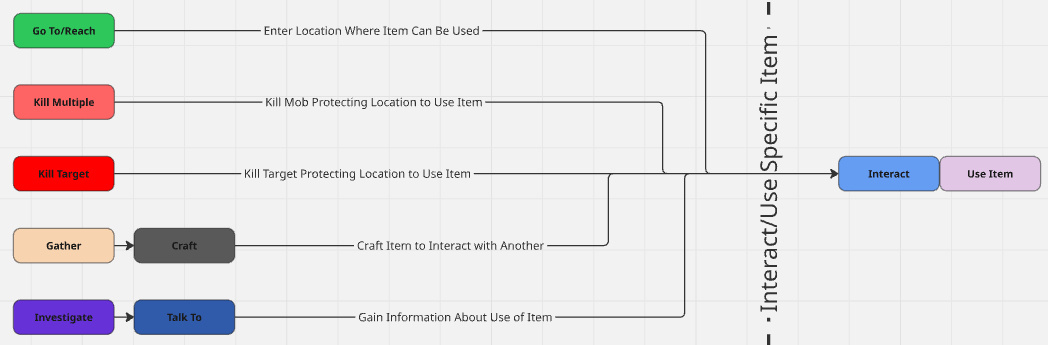
The player moves through 18+ multi-step quests that ask for different things at different moments: talk, gather, craft, investigate, kill, deliver. Each quest resolves into a reward and a world state that carries forward, and no two feel like the same errand because the underlying combinations differ.
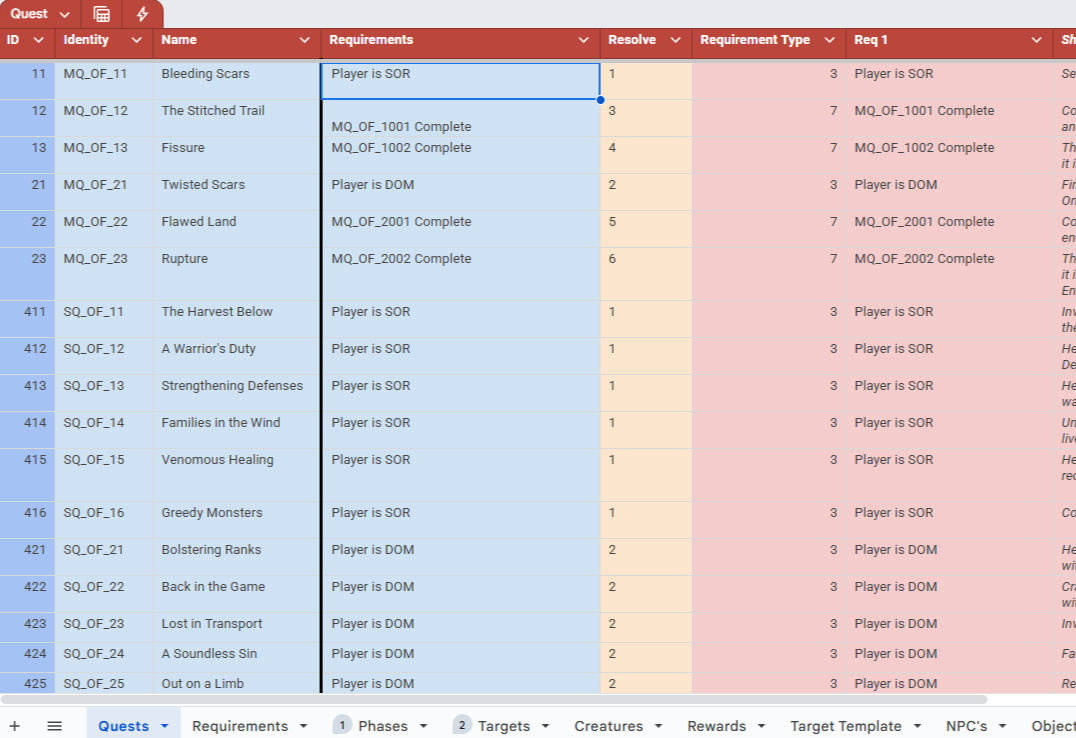
Quest states, phase gates, requirement types, faction conditions, NPC and object references, target and creature data, and reward hooks. Every quest is authored against explicit states and conditions rather than bespoke one-off logic, so progression can be validated instead of played through and hoped for.
One quest database as the source of truth, with standardized naming, IDs, logic, and formulas across quests, phases, requirements, targets, rewards, and objects, plus 100+ NPCs and 700+ creature types. Design, engineering, and level design all read from the same sheet, which is what let the quest pipeline scale past the point where hand-authored content would have stalled.
Built around a verb matrix of 12 quest archetypes, then implemented as structured data: objectives, quest states, triggers, conditions, references, and branching outcomes. This is the system I put in place so a large-scale MMORPG had structural protection against repetitive content.
ASCEND
Shipped a puzzle-adventure with a distributed team of roughly 20 contributors, owning narrative direction, puzzle logic, progression gating, and implementation-ready documentation from concept through release. Cut a planned five-level arc to two focused levels, saving 6+ months of scope without weakening the experience.
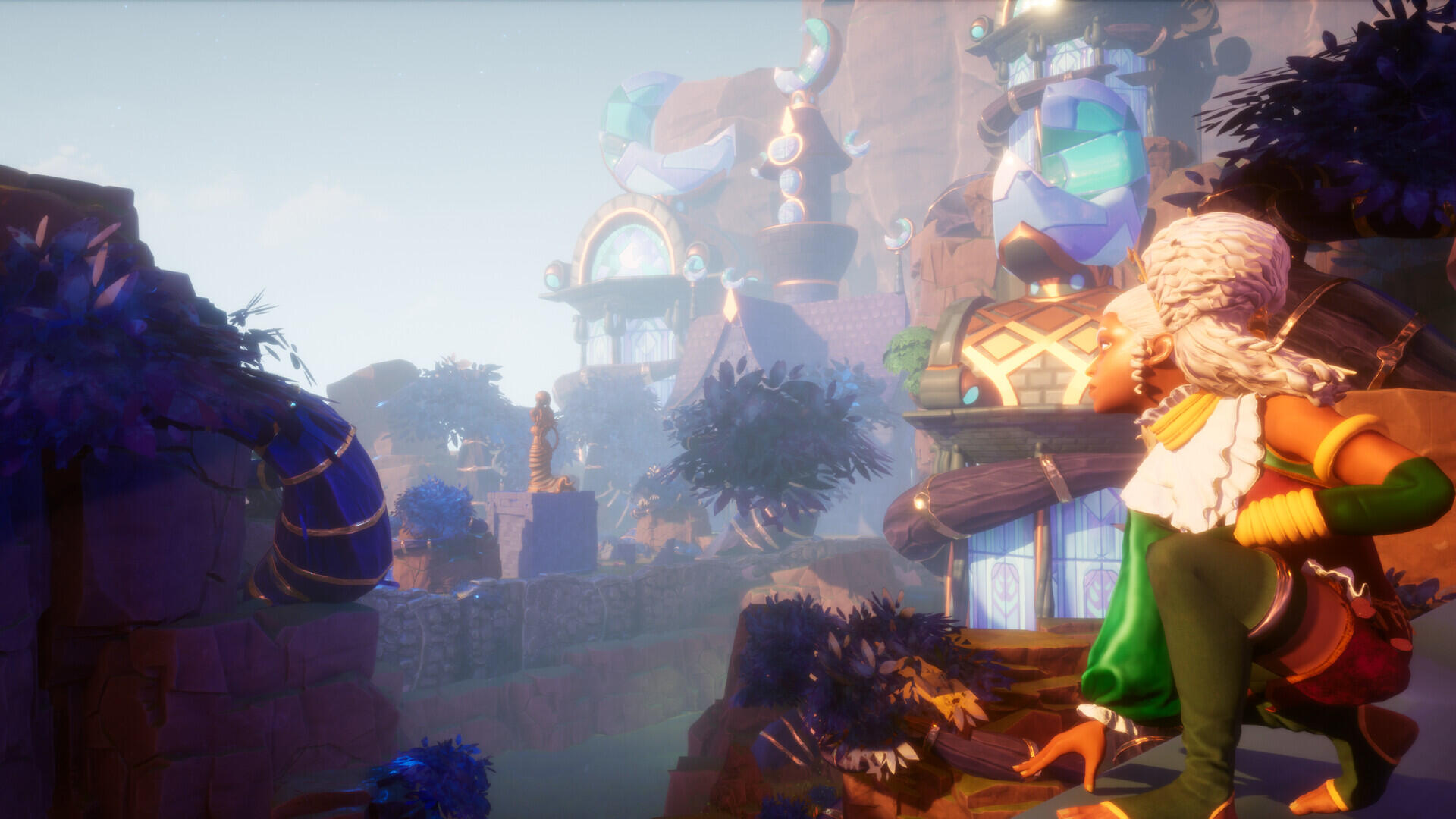
The player climbs a magical mountain, solving zodiac puzzles to pass each gate. Every level is built on one of the five stages of grief, and the people trapped on the mountain before them are encountered along the way. Solving a puzzle advances the story rather than pausing it, so progress and understanding arrive together.
Puzzle completion states, progression gates, clue availability, interaction states, and the player guidance layer that decides how much help to surface after repeated failure. Each level's gate is checked against the narrative beat it belongs to, so the story cannot get ahead of the player or fall behind them.
Short, practical design documentation covering puzzle logic, guidance rules, interaction states, progression gates, and scripted outcomes. Kept deliberately lean so every team knew what was needed and why without reading a novel to find it, which is what let a distributed team of twenty ship on schedule.
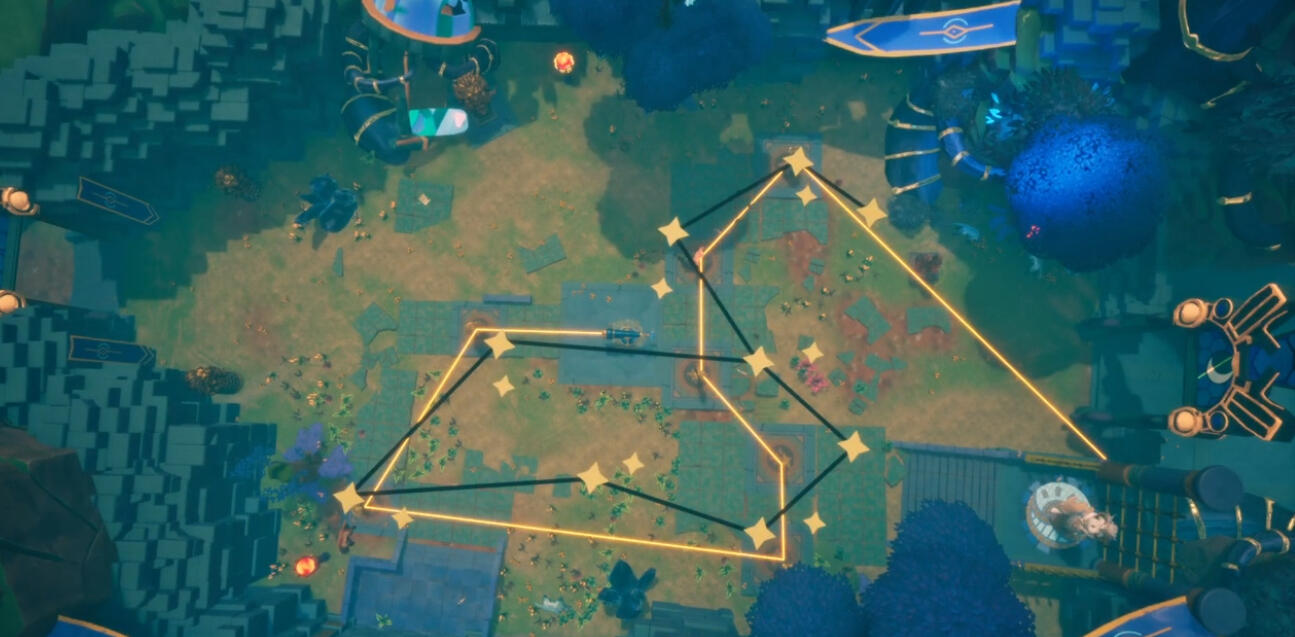
Designed puzzle and story content around player guidance, clues, interaction states, progression gates, and scripted logic, so each puzzle advanced the story without confusing the player and paid them back with a sense of accomplishment. When a light-and-mirror puzzle proved visually confusing in playtest, I redesigned it for readability and specified a constellation guide drawn across the level, so players could see the target shape before attempting the solve. The puzzle and the zodiac thread stayed intact.
PANDORA: CHAINS OF CHAOS
Shipped an open-world action-adventure with a remote team of roughly 10, owning mission structure, narrative triggers, quest flow, and Unreal implementation alongside programming and level design.
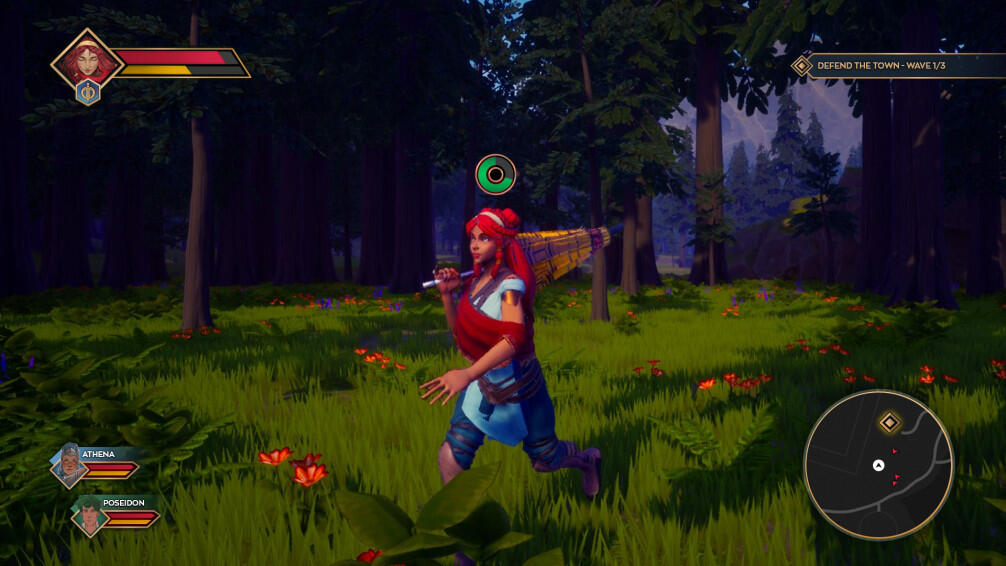
The player explores an open world at their own pace, using a magic umbrella that turns traversal into problem-solving and opens up the vertical space above and below the ground they are standing on. Story beats arrive as they move, and the world does not wait in place for them to find the next one.
Trigger volumes, quest flow state, narrative conditions, level flow, and story-state progression. Beats are gated on conditions rather than location alone, and triggers re-arm where the player can approach from more than one direction, so wandering does not desynchronize the arc.
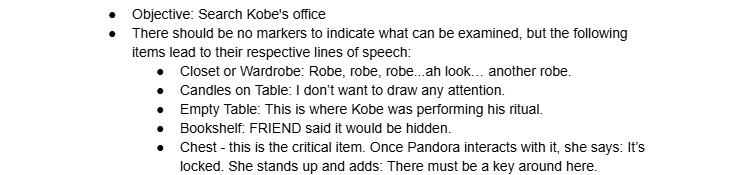
Mission structures documented beat by beat: the objective, the objects the player can examine, the line each one triggers, and the rule that no markers appear to point at them. Written so programming and level design could implement directly from the page rather than interpret it, which is what a ten-person remote team needed.
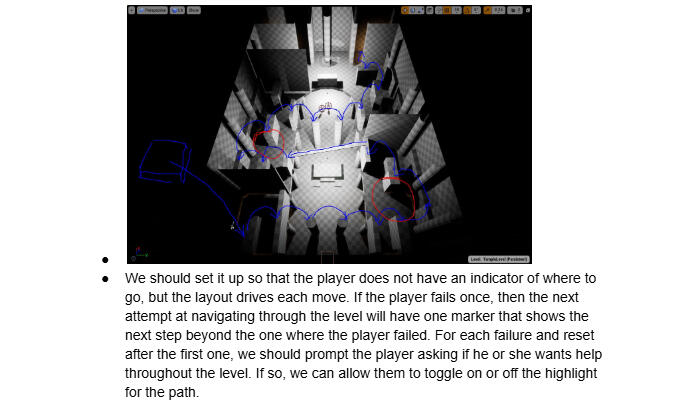
Aligned open-world mission pacing with quest triggers, narrative conditions, level flow, and reliable story-state progression so players could explore without breaking the intended main arc. Level layouts were designed to drive navigation without an on-screen indicator, with a guidance layer that surfaced the next step only after repeated failure.
The Tūn-Gāst of Oakshaw
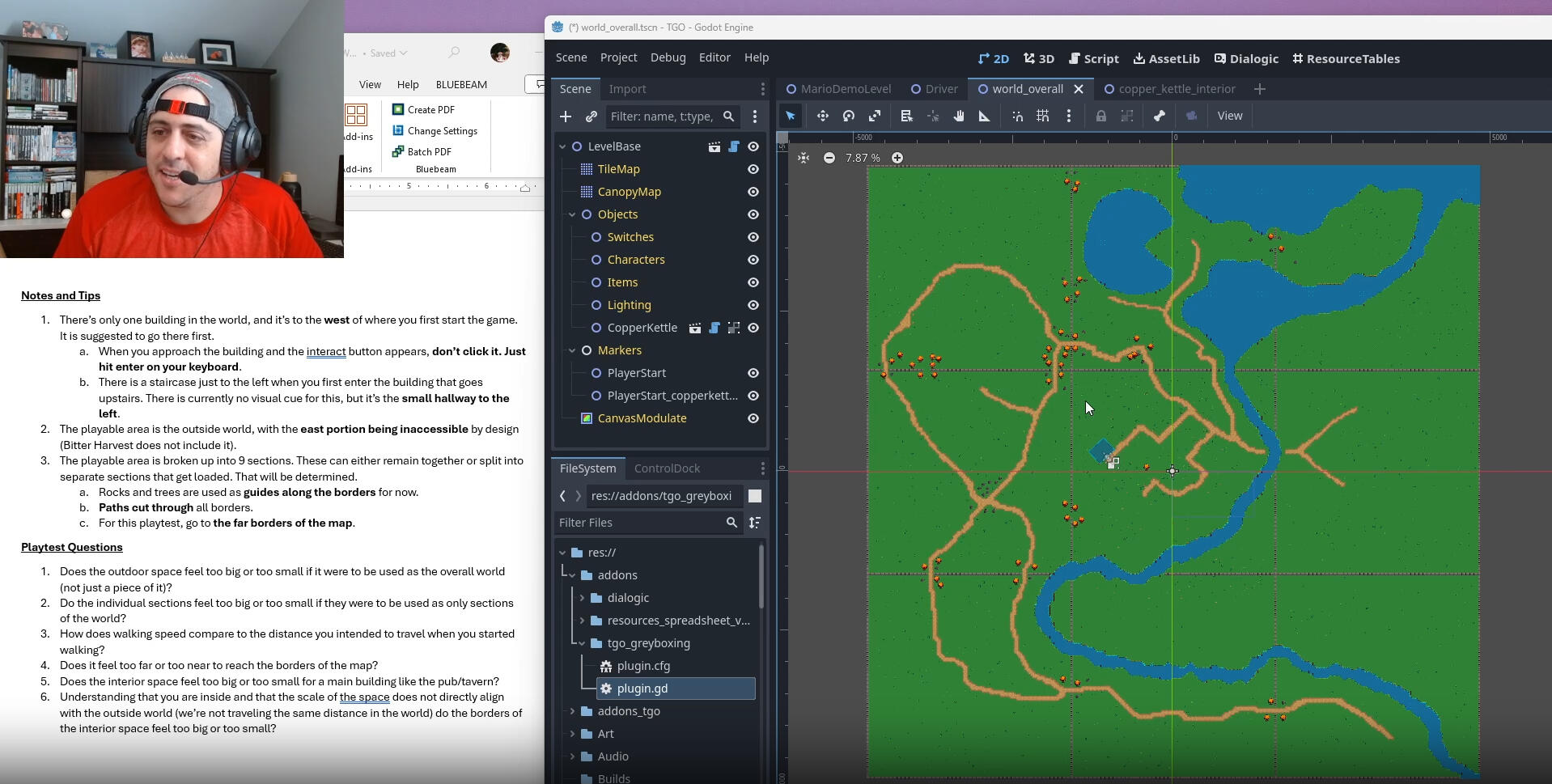
Led an 11-person design team while working in-engine to build the reusable level structures, object placement examples, workflow standards, and implementation templates the team designed inside.
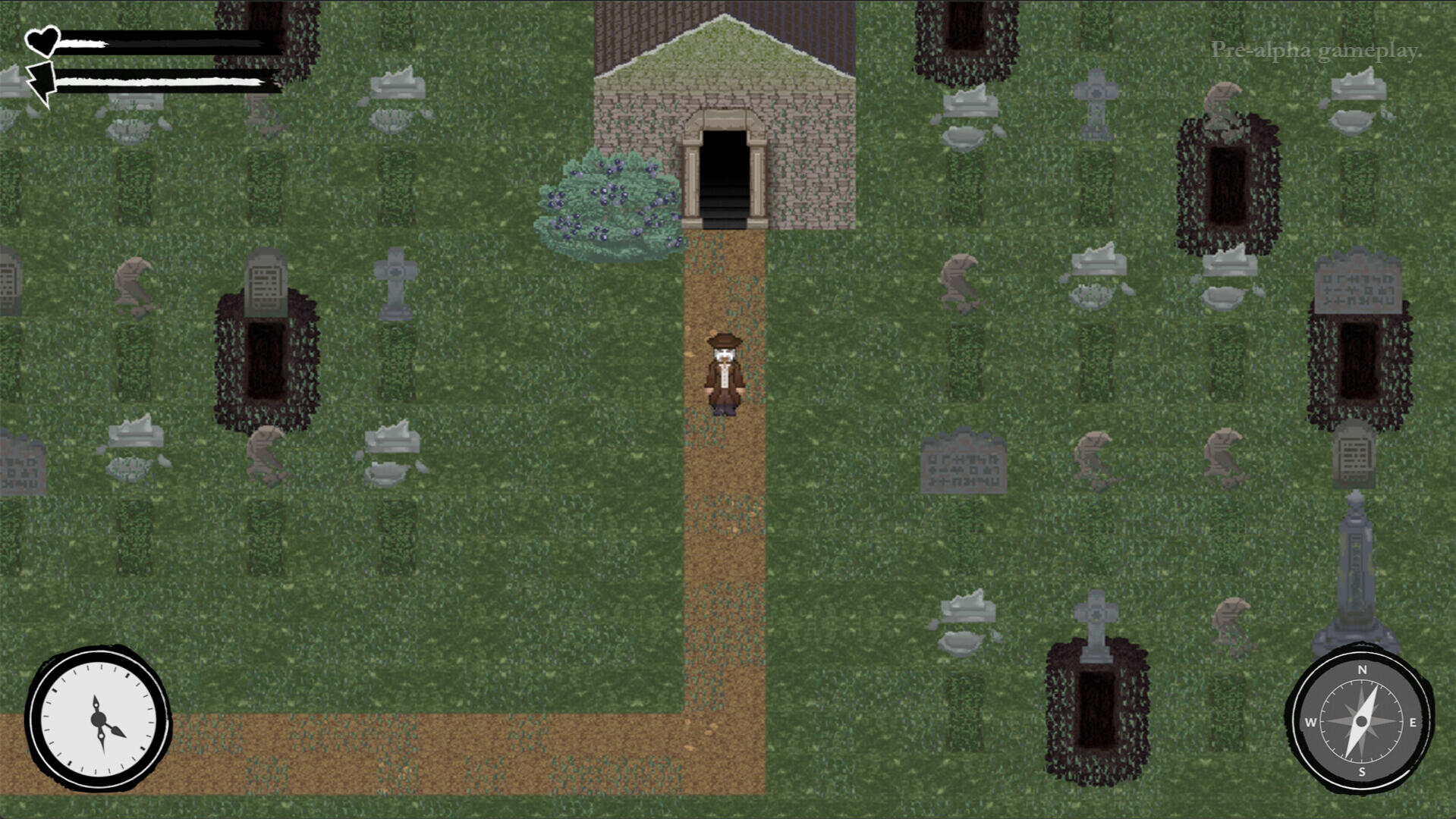
Eleven designers building levels and content against a shared set of structures rather than eleven interpretations of a brief. Each had real ownership of their work, with the layout logic, placement conventions, and workflow already established so the decisions they made were design decisions rather than guesses about what was expected.
Layout logic, object placement conventions, and the workflow standards a level had to satisfy before it was considered done. Prototypes were shared through GitHub so work stayed visible, and review happened in live design sessions rather than as a bottleneck on one person.
Playable spaces and implementation templates built in-engine, not a document describing them, along with the requirements I gave engineering for the greyboxing tooling the team needed. High-level direction turned into a format the team could open, work inside, and extend within the project's standards.
Worked in-engine to prepare level structures for other designers: playable spaces, layout logic, object placement, and workflow examples that carried high-level direction into something the team could build against directly. The scaffolding was the deliverable.
Making Choices Cost Something
Commitment as a mechanic in an unannounced strategy/management sim
Mario Mergola, Systems Designer. Project unannounced; details deliberately vague.
We want meaningful choices, but simulation and strategy games usually suffer from the same fate: you can change strategies or try to build paths concurrently. Those are hedged bets. Maybe some can benefit from that approach, but we wanted to reward those who stuck to their plan. The player runs an organization the way a Civ player runs a civilization. Commit to an identity, and the simulation makes that commitment matter in both directions.
Under the hood, the simulation produces realistic outcome ranges for different game situations. As designers, we plotted out those ranges so we could see what “should” happen, formed a baseline, and then built a system to adjust from that baseline. The key is that the player’s plan drives how strongly the simulation can be adjusted, where that consistency compounds in the player’s favor. Conversely, drifting between plans will loosen the player’s grip on the simulation where the risk-reward increases the further away it strays.
Before locking the design, I modeled outcome ranges in Python across groupings of similar situations to chart the realistic spread and limits. Seeing the shape of the distributions changed a design decision: real ranges were too tight to be dramatic, and the player’s impact would not be felt strongly enough (which opposed our design pillar that players must feel the impact of their decisions). Our new probabilities and their modifiers are built with a player-first approach that is accurate at its core but intentionally extreme otherwise. This will be the focus of our playtests.
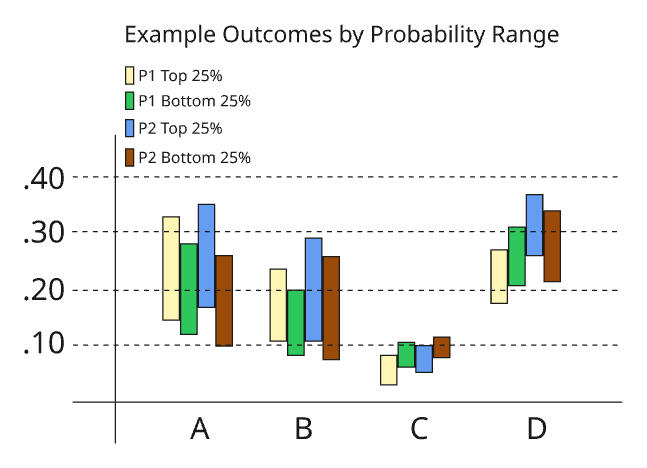
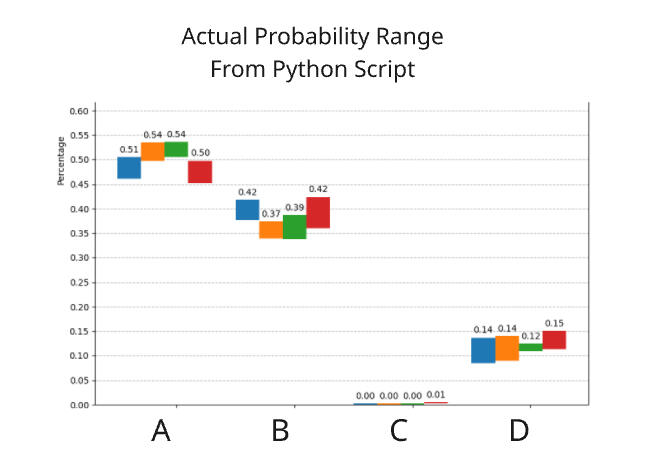
My biggest failed design was leading with the overall skill tree of an organization typically found in 4X games. It kept overruling the individual actions of the people in the organization. They already had their own values, and those numbers were constantly competing with the overarching ones. Pushing the tree aside allowed for progression to take place on the pawns, themselves, similar to RimWorld. As a positive result, we discovered that upgrading these pawns would also make them more desirable for rivals to poach, adding a storytelling element (and system) to the mix.
If the simulation is accurate and the players can’t feel their choices, the simulation is wrong.
OFTEN GO AWRY
This scene plays at the start of a mission in a Mafia or Payday-style open-world crime sim. The player controls Rafael, the crew is inside, and the job is going fine until it isn't. What breaks it is not the thing the player was warned about, but the thing the room was built around: no visual sensors, because of the cat that sets them off every night.
It went through three iterations on feedback from professional narrative designers. It ends with one crew member dead and the player-character separated from the man who killed him, which is the state the following mission inherits. A cutscene is a handoff, not a short film.